
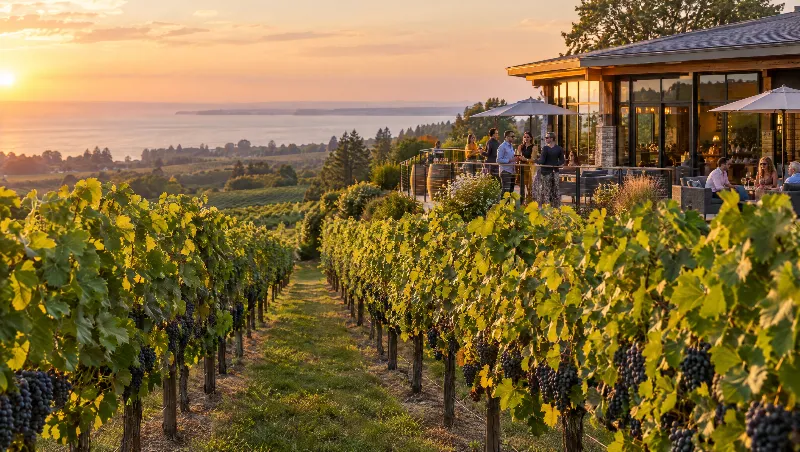
A winery is three businesses at once. In the vineyard you are a farm, exposed to frost, hail and equipment on uneven ground. In the cellar you are a manufacturer holding inventory that gains value for years before it is sold. In the tasting room you are a hospitality venue serving alcohol to visitors who often arrived by car. A good policy treats each of those parts on its own terms, and few insurers are comfortable with all three. As an Ontario brokerage that specializes in hospitality, we work with insurers that understand wineries, from Niagara wine country to Lake Erie North Shore. You can see how wineries compare with other food and drink operations on our page of business types.
What winery insurance usually includes
Most wineries carry a commercial package built around inventory and visitors, with farm and specialty coverages added as needed.
- Property and stock. Covers buildings, presses, tanks, barrels, bottling equipment and finished wine. How stock is valued, at cost or at selling price, makes a big difference after a loss.
- Liquor liability. Needed for tastings, glass sales, wine bars, festivals and events. Read about cover for alcohol served at tastings and events.
- General and product liability. Responds to visitor injuries on tours, in the cellar or on vineyard walks, and to claims about your wine, such as broken glass in a bottle. See liability for visitors on your property.
- Business interruption. Covers lost profit and fixed costs if a covered loss closes the tasting room or stops production. Learn how lost income is replaced after a closure.
- Equipment breakdown. Pays for sudden failure of refrigeration, fermentation temperature controls, pumps and bottling lines.
- Farm equipment and auto. Tractors, sprayers and vehicles used on the property usually need their own coverage.
Risks that are specific to wineries
Inventory that takes years to replace
A fire, roof collapse or sprinkler leak in a barrel room can destroy several vintages at once. Unlike most food businesses, you cannot simply restock next week. Make sure your stock limit reflects the real value of what is in the cellar, and let us know after harvest and bottling so we can update it.
Example: A sprinkler pipe bursts in a Niagara winery’s barrel room during a February cold snap. Water floods the floor, and several racks of barrels are knocked over when staff try to move them, losing two vintages of reserve red. The property section pays for the lost wine at the valuation in the policy, and business interruption helps cover the sales that wine would have earned over the next two years.
Tasting rooms and visitors who drive
Most winery visitors arrive by car, and many visit several wineries in one afternoon. That makes overservice a real concern even with small pours. Track pour sizes, offer water and food, and make sure staff hold Smart Serve certification. The AGCO sets the terms of your manufacturer licence and any on-site sales or events.
Tours, cellars and uneven ground
Visitors walk on gravel paths, down cellar stairs, between rows of vines and near forklifts and tanks. Clear routes, railings, lighting and signage help reduce falls. Insurers will ask whether tours are guided and where guests are allowed.
Weddings, festivals and events
Many wineries host weddings, concerts and harvest festivals. These bring large crowds, longer drinking hours, outside caterers and sometimes tents and stages. Ask vendors for their own certificates, and share your event calendar with us.
Weather and the vineyard
Frost, hail and a hard Ontario winter can wipe out a crop. Standard commercial property cover generally does not include growing vines and grapes, so we will walk you through the crop and specialty options available for your vineyard.
Cideries and fruit wineries
Cideries and fruit wineries share most of these risks. Some also run orchards, u-pick operations or farm markets, which add visitor liability and food sales. Mention every activity when you apply.
Harvest crews and seasonal staff
Harvest brings extra pickers, cellar hands and tasting room staff, often for only a few weeks. Ladders, bins, presses and tractors on slopes all create injury risk. WSIB covers employee injuries and is separate from your commercial policy, so make sure seasonal staff are reported as required.
How exposures change by type of operation
| Operation | What tends to matter most |
|---|---|
| Estate winery with vineyard | Stock valuation, farm equipment, tours on the property |
| Urban or négociant winery | Production equipment, leased premises, wholesale product liability |
| Tasting room focus | Liquor liability, visitor volume, business interruption |
| Event and wedding venue | Large crowds, outside vendors, event liquor exposure |
| Cidery or orchard | U-pick and farm market liability, seasonal staff, fruit sourcing |
Producers who also brew, or run a taproom, can compare with how craft breweries are insured.
Getting a quote for your winery
Use the form on this page to tell us about your winery, including production, inventory value, tasting room hours and events, or call us at (416) 346-6886. One of our hospitality brokers will ask about your operation, then take your application to insurers that suit wineries and beverage producers. We explain how each option handles stock, liquor and visitor liability, set up the policy you choose and stay with you for event certificates, changes, renewals and claims. The quote is free and there is no obligation.
Common questions
Is wine in barrels and tanks covered?
Bulk and bottled wine can be covered as stock under the property section, but valuation matters. We compare whether each insurer values wine at cost or at selling price, and how wine still aging in barrel is treated.
Are my vines and grapes covered against weather?
Standard commercial property policies generally exclude growing crops and vines. Ontario grape growers may be able to use provincial crop insurance programs, and some insurers write specialty coverage. We can explain what is available for your vineyard.
Do I need special coverage for weddings at the winery?
Hosting weddings and private events adds liquor exposure, larger crowds and sometimes outside vendors. Tell us about your event calendar so liability limits and liquor coverage reflect it.
How much does winery insurance cost?
Production, inventory value, visitor numbers, events and food service all play a part. Our cost guide explains estimated Ontario ranges and the factors.