
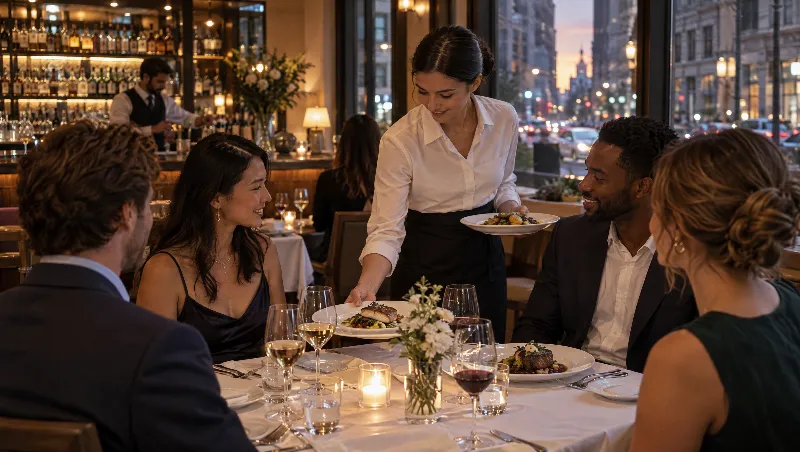
A full-service restaurant asks a lot of its insurance. Guests sit for an hour or more, servers carry hot plates through tight aisles, the bar pours all evening and the kitchen runs gas burners, fryers and charbroilers at full tilt. Any one of those can produce a claim, and a serious fire can shut you down for months. Plenty of insurers would rather not take that on, which is exactly why it pays to work with a brokerage that knows restaurants and has the markets that write them. You can compare this profile with other operations on our page covering each type of food business.
What a full-service restaurant policy usually includes
Most sit-down restaurants carry a commercial package that we tailor to seating capacity, sales mix and hours.
- General liability. Responds when a guest is hurt or their property is damaged because of your operation: a fall on a wet floor near the dish pit, a burn from a sizzling platter, or an illness traced to a meal. See how liability cover for guest injuries and illness works.
- Liquor liability. Protects you when someone you served causes harm after leaving, or is hurt on site because of intoxication. For restaurants with a real bar program, this is one of the most important parts of the policy. Read about protection for overservice claims.
- Property and leasehold improvements. Covers kitchen equipment, furniture, the bar build-out, artwork and the improvements you paid for in a leased space.
- Business interruption. Pays continuing expenses and lost profit after a covered loss forces a closure. Our guide to keeping income flowing during a shutdown explains the waiting period and indemnity period.
- Equipment breakdown. Covers sudden mechanical or electrical failure of walk-ins, dish machines, combi ovens, HVAC and the make-up air unit.
- Spoilage, crime and tenant’s legal liability. Spoiled inventory after a power cut, theft of cash or wine stock, and damage you cause to the landlord’s building.
Risks that are specific to sit-down dining
Kitchen fires and hood systems
Charbroilers, woks and deep fryers create grease-laden vapour that builds up in ductwork. Insurers will ask about your suppression system, how often the hood and ducts are professionally cleaned, and whether you keep the certificates. A lapsed cleaning schedule can affect both price and how a fire claim is handled.
Overservice and the long evening
Guests who linger over dinner often order more than they planned. Staff trained through Smart Serve are better placed to cut someone off politely, and insurers often ask whether all of your servers hold current certification.
Example: A party of six celebrates a birthday over a three-hour dinner at a Toronto restaurant with several bottles of wine and after-dinner drinks. One guest drives home and rear-ends another vehicle. The injured driver’s lawyer names the restaurant in the claim, arguing the guest was visibly intoxicated when served. Liquor liability responds to the defence and any settlement, up to the policy limit.
Allergens and special orders
Full menus with sauces made in-house mean many hidden ingredients. A server who misreports an allergy or a cook who uses the wrong pan can cause a severe reaction. Clear ticket notes and a documented allergen process help with both prevention and any claim that follows.
Staff injuries
Burns, knife cuts and back strains are common in busy kitchens. Workers’ compensation through WSIB handles most employee injuries and is separate from your private policy. Register with WSIB where required.
Private events and patios
Buyouts, holiday parties and patio season add guests, alcohol and sometimes outside vendors. Each can change your exposure, so mention them to us up front and we will make sure the insurer has them on file.
What insurers look at when rating a restaurant
Underwriters want a clear picture of how your dining room runs before they offer terms. Expect questions about seating capacity, annual sales and the split between food and alcohol, closing time, the cooking methods on your line, the age of your electrical and plumbing, and whether you own or lease the building. They will also ask about past claims and any gaps in coverage.
Having a few documents ready speeds things up: your lease, your liquor licence, recent hood cleaning and suppression service reports, and a floor plan if you have one. Owners who can show tidy records often get a smoother process, and our brokers use them to make the case for better terms with each insurer we approach.
How exposures change with your format
| Format | What tends to matter most |
|---|---|
| Family dining | Slip and fall liability, high-chair and child injuries, kitchen fire |
| Casual dining with bar | Liquor liability limits, late hours, patio service |
| Fine dining | Wine cellar value, artwork and décor, business interruption for a long rebuild |
| Restaurant with banquet room | Private event liability, outside vendors, larger guest counts |
If your sales tilt toward drinks rather than plates, read how coverage works for pubs and licensed lounges, since insurers may rate you more like a bar. Restaurants that send food out to events should also look at protecting off-site catering.
Getting a quote for your restaurant
Fill in the short form on this page with your seating, hours and sales mix, or call us at (416) 346-6886. One of our hospitality brokers will ask about your operation, then take your application to insurers that suit a restaurant like yours. We walk you through how limits and deductibles differ, set up the policy you choose and stay with you for landlord certificates, changes, renewals and claims. The quote is free and there is no obligation.
Common questions
Do I need liquor liability if alcohol is a small part of my sales?
If you hold an AGCO liquor licence, yes. Even a modest wine list creates exposure if a guest is overserved and later causes an accident. Insurers price it on your liquor sales, so a lower share of alcohol revenue usually means a lower charge for that part of the policy.
Are private events and patio service covered?
Usually, as long as the insurer knows about them. Tell us if you host buyouts, live music or a seasonal patio, since each can affect liability limits and the liquor portion of the policy, and some insurers handle them better than others.
What limits do landlords usually ask restaurants to carry?
Commercial general liability of $2 million per occurrence is common, and many landlords ask for $2 million to $5 million and to be named as additional insured. Send us your lease and we will set limits that meet it and issue the certificate.
How much does full-service restaurant insurance cost?
It depends on seating, sales, the share of revenue from alcohol, cooking methods and claims history. See our guide to restaurant premiums for estimated Ontario ranges and the factors involved.