

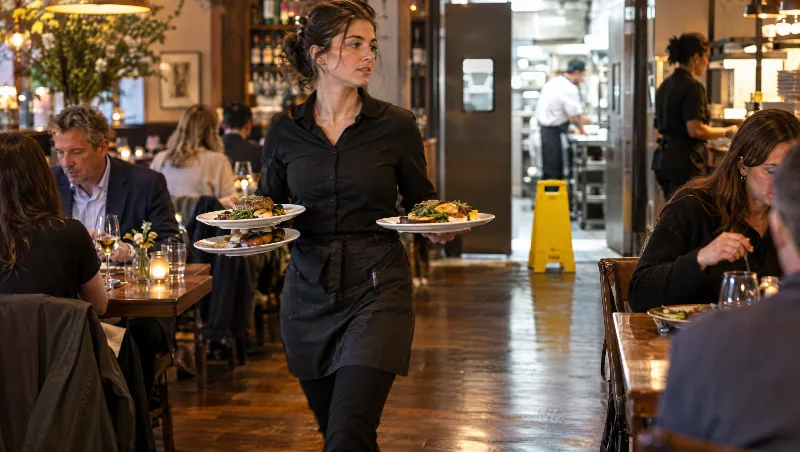

Most restaurants, cafés, bakeries and caterers in Ontario are insured with a commercial package policy. Instead of buying liability from one company and property cover from another, you get a set of coverages from one insurer, written around how a kitchen and dining room actually operate. Our brokers adjust the mix for your business, but the building blocks are the same. If you want to see how the mix changes from one kind of operation to another, start with our guide to coverage by business type.
Placing that package is where a specialist helps. Many insurers simply do not want deep fryers, late-night liquor sales or hotel pools on their books. We work with insurers, including specialty and hospitality-focused markets, that actively write this business, so one application can be shopped across several of them.
The core of the package
Liability to other people
General liability responds when someone outside your business says you injured them or damaged their property. In a food business that covers a guest slipping near the washrooms, a delivery driver tripping on an icy loading dock step in January, and, through product liability, a customer who says your food made them sick. Landlords and event venues almost always ask for proof of it. Our page on slip, fall and food illness liability goes into limits, allergens and certificates.
Liability for serving alcohol
If you hold an AGCO liquor licence, a general liability policy often limits or excludes claims tied to intoxication. Liquor liability fills that gap when a guest you served injures themselves or someone else. See how liquor cover works for licensed premises.
Your own property
Property and contents coverage pays to repair or replace what you own after a covered loss like fire, smoke or water damage: leasehold improvements, kitchen equipment, furniture, inventory and signage. Tenants usually also carry tenant legal liability, which covers damage you cause to the landlord’s building.
Lost income
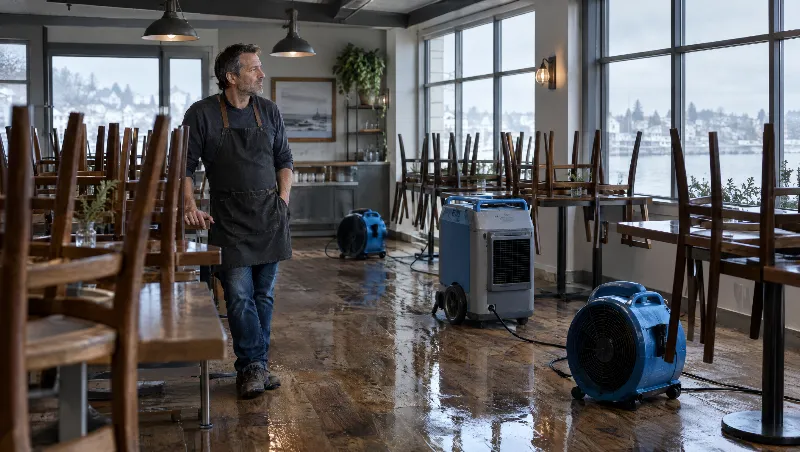
When a fire or flood closes you down, the repairs are only half the problem. Business interruption replaces the profit you would have earned and keeps paying fixed bills like rent and payroll. Read how lost income is calculated after a closure.
Machines that fail on their own
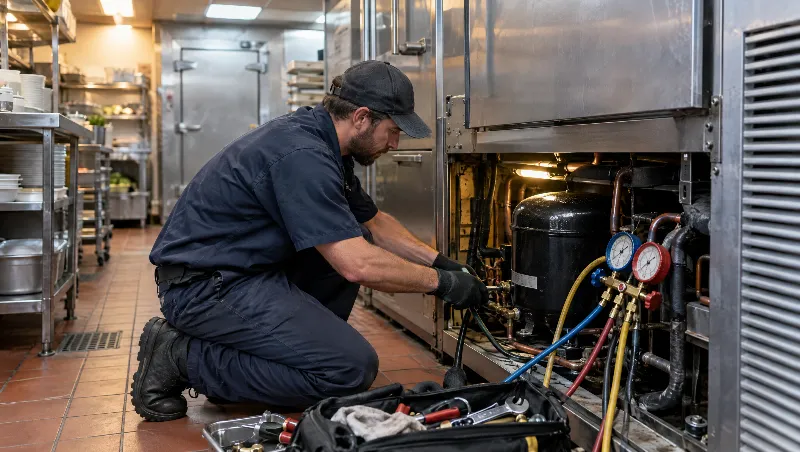
Property cover is built for external events. A compressor that burns out or a control board that shorts is usually excluded. Equipment breakdown covers that gap for refrigeration, ovens, espresso machines and electrical systems. Our page on breakdown cover for kitchen equipment has examples.
Coverages often added to the package
- Spoilage. Pays for food lost when a cooler fails or the power goes out.
- Crime. Covers cash and stock lost to theft, including employee dishonesty.
- Commercial auto. Needed for food trucks, catering vans and delivery vehicles owned by the business. Hired and non-owned auto can cover staff using their own cars.
- Cyber. Responds to data breaches and ransomware affecting point-of-sale, online ordering or reservation systems.
How the pieces fit together
| Event | Coverage that usually responds |
|---|---|
| Guest slips on a wet floor | General liability |
| Patron you over-served causes a crash | Liquor liability |
| Kitchen fire damages equipment | Property and contents |
| Closed six weeks after that fire | Business interruption |
| Walk-in compressor fails, stock spoils | Equipment breakdown and spoilage |
| Break-in at night, cash taken | Crime |
Example: A grease fire starts in the hood of a Hamilton pizzeria. Property cover pays for the damaged line and ductwork, business interruption replaces lost profit and payroll during the five-week rebuild, and spoilage pays for the stock lost when the power was cut.
Getting a quote for your food business
Fill in the short form or call us at (416) 346-6886. One of our licensed brokers asks how your business runs, then we take your application to insurers that suit your operation and walk you through the options in plain language. Once you choose, we set up the policy and stay with you for certificates, changes, renewals and claims. The quote is free and there is no obligation.
Common questions
Do I need every coverage on this page?
Not necessarily. A small takeout counter with no alcohol has very different needs from a full-service restaurant with a bar. One of our brokers will ask how you operate and recommend the coverages that match your actual risks.
Is a package policy cheaper than buying coverages separately?
Bundling coverages in one commercial package is usually simpler to manage and often more cost effective than separate policies, because one insurer prices the whole risk. Our cost guide explains what moves the price.
Does a food business package include workers' compensation?
No. In Ontario, workplace injury coverage is provided through the WSIB, and registration is mandatory for most employers. It is separate from the private commercial policies we place for you.
Why use a broker that specializes in restaurants?
Many insurers avoid restaurants, bars and hotels, so a generalist may only have one or two places to send your application. We work with insurers that actively want food and hospitality business, so we can shop your coverage across several of them.