
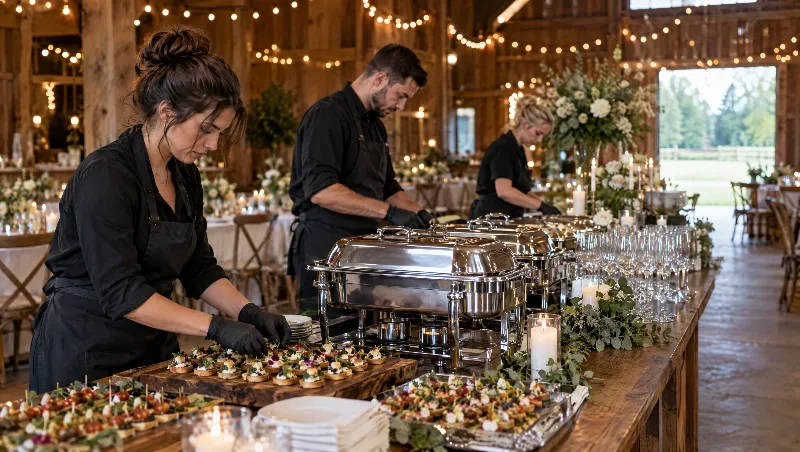
Caterers work in places they do not control. One week it is a hotel ballroom in downtown Toronto, the next a backyard tent, a corporate boardroom or a barn in cottage country with uneven floors and an extension cord running across the grass. Food is prepared in one kitchen, packed, driven, held at temperature and served by staff who have never seen the room before. Each step is a chance for something to go wrong, and a catering policy needs to follow the work wherever it goes. Not every insurer is set up for that, which is why we take caterers to markets that understand off-site food service. You can compare catering with fixed operations on our types of food business page.
What catering insurance usually includes
Most caterers carry a commercial package with a few adjustments that restaurants rarely need.
- General liability. Covers injuries to guests and damage to the venue or the client’s property, plus product liability if guests get sick. This is the coverage venues ask about first. See how liability cover at client events works.
- Liquor liability. Needed if your staff serve alcohol, whether you supply it or the client does. Read about protection for event bar service.
- Property, including off premises. Covers your commercial kitchen, plus chafers, linens, tableware, portable bars and serving equipment while in transit and at event sites.
- Equipment breakdown. Pays for sudden failure of combi ovens, blast chillers, walk-ins and portable refrigeration. Learn about repairs after mechanical or electrical failure.
- Commercial auto. Covers owned vans and trucks used to deliver food and equipment. Staff using their own vehicles may need hired and non-owned auto.
- Business interruption. Replaces income if a fire or flood at your production kitchen forces you to cancel bookings.
Risks that are specific to caterers
Food held between kitchen and table
Food cooked hours before service has to stay hot or cold through loading, travel, setup and a long reception. A failed cooler or a delayed ceremony can push food into the danger zone. When dozens of guests get sick at one event, the claim can be large.
Example: A caterer serves a 180-guest wedding at a rural barn venue outside Guelph. The outdoor ceremony runs late on a hot afternoon, and a seafood appetizer sits out longer than planned. The next day, several guests report food poisoning and two are hospitalized. The couple and several guests bring claims. The caterer’s general liability, through its product liability component, responds to the medical costs and the legal defence, subject to the policy’s limits.
Damage to someone else’s property
Rolling racks scrape hardwood floors, a dropped tray stains carpet, and a portable burner scorches a tablecloth on an antique table. Because you are working in a venue or private home, these claims land on you. Many venue contracts also hold the caterer responsible for anything their staff damage.
Bar service at events
Pouring at weddings and corporate parties creates real liquor exposure. Guests drink over a long evening, and the line between the host’s responsibility and yours is not always clear. In Ontario, staff serving alcohol are expected to hold Smart Serve certification, and special occasion permits are issued through the AGCO. We make sure your policy reflects how you serve, whether you supply the bar or staff a client’s.
Temporary staff and long days
Catering relies on part-time servers and kitchen help working long, physical shifts. WSIB handles employee injuries separately from your commercial policy, so register where required.
Contracts and certificates
Venue agreements commonly ask for a minimum liability limit, additional insured status and sometimes a waiver of subrogation. Send us the contract before you sign if anything is unclear, and we will confirm your policy meets it.
When a kitchen loss cancels bookings
Caterers often book months ahead. A fire or flood at your production kitchen can force you to cancel or subcontract events you have already taken deposits for. Business interruption can help with lost profit and continuing expenses, and extra expense coverage can pay for renting another kitchen so you can keep your commitments. We will explain how both work and what waiting period applies.
How exposures change by type of catering
| Catering type | What tends to matter most |
|---|---|
| Drop-off corporate catering | Food in transit, auto coverage, product liability |
| Full-service weddings and galas | Venue damage, liquor liability, large guest counts |
| On-site cooking at private homes and cottages | Damage to the client’s home, open-flame equipment, property in transit |
| Restaurant with catering arm | Extending the restaurant policy off premises, separate event certificates |
If your catering grew out of a dining room, read about coverage for sit-down restaurants to see how the two fit. Caterers who also run a truck should look at how mobile kitchens are insured.
Getting a quote for your catering business
Fill in the form on this page with your annual sales, the types of events you serve and whether your staff pour alcohol, or call us at (416) 346-6886. One of our hospitality brokers will ask about your operation, then take your application to insurers that suit catering companies. We explain the options in plain language, set up the policy you choose and stay with you for venue certificates, changes, renewals and claims. The quote is free and there is no obligation.
Common questions
Why do venues ask to be named as additional insured?
Being named gives the venue a direct right to the protection of your liability policy if a claim arises from your work at their property. Many venues and event planners require it, along with a minimum limit, before they let you on site. We issue the certificate for each event you book.
Do I need liquor liability if the client supplies the alcohol?
If your staff serve it, you are likely exposed even when the client bought the bottles. We will explain how each insurer treats host-supplied alcohol, and the AGCO sets which licence or special occasion permit applies at the event.
Is my equipment covered while it is in the van or at a venue?
Standard property cover often only applies at your listed address. We arrange coverage that extends to property in transit and at temporary locations, since most catering losses happen away from the kitchen.
What does catering insurance cost?
Annual sales, number of events, alcohol service and vehicles all play a part. Our cost guide explains estimated Ontario ranges and the main factors.